
Kusa Jataka
The Story of the Golden Deer and the Loyal Prince
In the ancient land of Mithila, the King, a just and virtuous ruler, was blessed with a son named Prince Kusa. Kusa was known not only for his princely demeanor but also for his extraordinary beauty and the unwavering kindness that radiated from him. However, fate had a peculiar test in store for the young prince. The King, on his deathbed, entrusted the kingdom to his wise queen, and in his final moments, revealed a secret: Prince Kusa was not his biological son, but had been found abandoned as an infant and raised as his own. He also revealed that the prince bore a distinctive birthmark, a golden lotus on his left thigh, which would only be visible under a specific celestial alignment.
The Queen, though saddened by the revelation, loved Kusa as her own and continued to rule with wisdom. As Kusa grew, he excelled in all princely arts – swordsmanship, archery, governance, and philosophy. Yet, a nagging doubt sometimes crept into his mind, a whisper of his unknown origins. He was a prince in all but the certainty of his bloodline. The Queen, sensing his inner turmoil, would reassure him, but the true nature of his birth remained a closely guarded secret.
One day, while the kingdom rejoiced in a festival, a renowned sage visited the royal court. He observed Prince Kusa with an unusual intensity. After the festivities, the sage sought an audience with the Queen. "Your Majesty," he began, his voice serene, "I have seen the prince, and I sense a great destiny entwined with his fate. But there is a secret about his birth, is there not? A mark that reveals his true lineage?"
The Queen, surprised by the sage's insight, confided in him, revealing the story of finding the prince and the hidden birthmark. The sage explained, "Under the specific alignment of the stars, the mark will appear, revealing his royal lineage. This knowledge, however, can be both a blessing and a curse. It can bring him power and recognition, but it can also attract envy and danger. He must be prepared."
The sage also spoke of a prophecy: when Kusa reached the age of twenty, the kingdom of Kasi, ruled by a tyrannical king, would seek a bride from Mithila. Kusa, despite his noble heart, would be forced to make a difficult choice, one that would test his courage and his loyalty.
As Kusa approached twenty, the prophecy began to unfold. A delegation from Kasi arrived, demanding the hand of Mithila's most beautiful maiden in marriage to their king. The Queen, fearing the wrath of the Kasi king, was in a quandary. Kusa, overhearing the discussion, stepped forward. "Mother," he said, his voice firm, "I will go to Kasi. I will offer myself as the bridegroom, disguised as a maiden. This way, I can protect our maidens and perhaps even bring some sense to the tyrannical king."
The Queen was horrified. "My son, this is madness! You cannot go disguised as a woman. It is too dangerous!"
Kusa smiled, a hint of sadness in his eyes. "Mother, the sage spoke of a difficult choice. This is my choice. I will protect our people." He also revealed his secret to his mother, "And perhaps, if the stars align, my true identity will be revealed when I need it most."
Despite his mother's pleas, Kusa prepared for his journey. He was adorned in the finest silken robes, his face painted, and his hair elaborately styled. He was given the name 'Kusumavati' and sent to Kasi with a grand retinue.
Upon arriving in Kasi, Prince Kusa, disguised as Kusumavati, was presented to the King of Kasi. The king, a man consumed by his own vanity and cruelty, was immediately captivated by Kusumavati's supposed beauty. He declared that Kusumavati would be his queen.
Life in Kasi was a gilded cage for Kusa. He endured the king's advances with stoic grace, all the while observing the suffering of the people under the tyrant's rule. He saw how the king oppressed his subjects, levied unfair taxes, and lived in opulent disregard for their well-being. Kusa's heart ached for the people of Kasi, and he yearned to escape this charade.
One night, as Kusa lay in the royal chambers, the celestial alignment foretold by the sage occurred. A sliver of moonlight fell upon his thigh. To his astonishment, the golden lotus birthmark began to glow, its luminescence piercing through the silken robes. At that very moment, a loyal minister of Kasi, who had secretly despised his king's cruelty, entered the chamber. He had been drawn by the strange light. He beheld the glowing mark and, remembering ancient prophecies of a hidden prince, realized Kusa's true identity.
The minister, seizing the opportunity, approached Kusa. "Prince," he whispered, bowing low, "I know who you are. Your mark reveals your noble lineage. I am loyal to the true principles of righteousness, not to this tyrant. I will help you."
Kusa, seeing a glimmer of hope, revealed his true identity to the minister. Together, they devised a plan. The minister rallied a group of like-minded nobles who were also weary of the king's misrule.
During a grand feast held to celebrate the impending marriage, Kusa, with the help of the minister and his allies, made his move. He revealed himself to the court, his prince's bearing now evident beneath the feminine disguise. The golden lotus mark, still faintly glowing, was visible to all.
The King of Kasi, enraged and humiliated, ordered Kusa's arrest. But the loyal minister and his followers stood in Kusa's defense. A battle ensued within the palace walls. Kusa, with his exceptional swordsmanship, proved a formidable warrior. The people of Kasi, hearing of the prince's bravery and the tyrant's downfall, stormed the palace in support.
The tyrannical king was overthrown, and Kusa, now free from his disguise and his ordeal, addressed the people of Kasi. He spoke of justice, compassion, and good governance. He declared that he would not claim the throne of Kasi but would help them establish a righteous rule.
Kusa then returned to Mithila, where he was hailed as a hero. The Queen rejoiced at his safe return and his valiant deeds. The truth of his birth was now widely known, but it no longer mattered. His actions, his courage, and his compassion had proven his true nobility.
He eventually ascended the throne of Mithila, ruling with the same wisdom and kindness that his mother had shown. He was a prince who had faced deception and danger with unwavering integrity, and a king who understood that true royalty lies not in birthright, but in the strength of character and the commitment to serve others.
— In-Article Ad —
💡Moral of the Story
True nobility is demonstrated not by birth, but by one's actions, courage, compassion, and commitment to righteousness. Integrity and self-sacrifice in the face of adversity reveal one's true character.
Perfection: Courage (Virya) and Integrity (Sacca)
— Ad Space (728x90) —
More Jataka Tales You May Enjoy
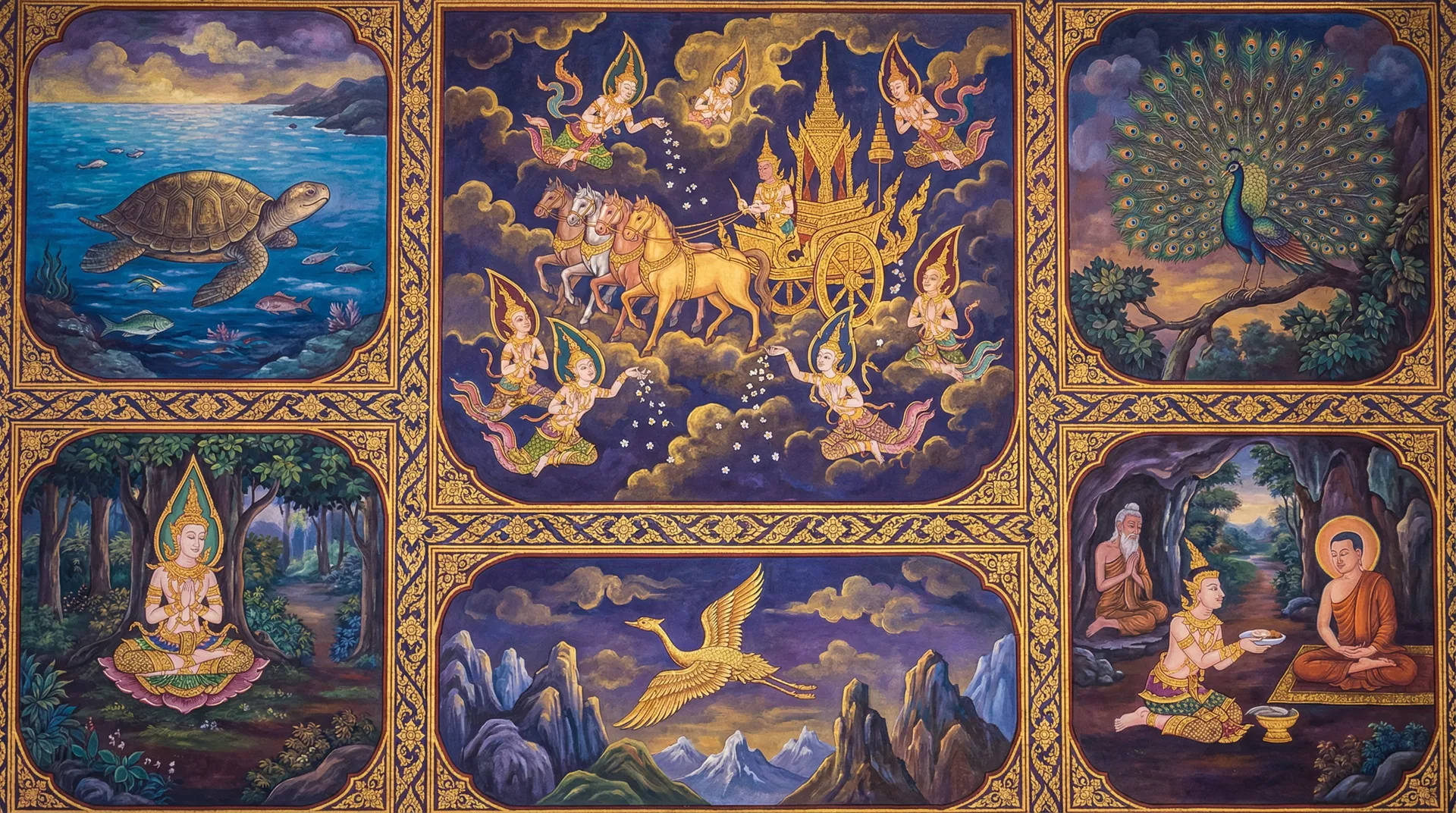 413Sattakanipāta
Sankha-Jataka
Sankha-JatakaIn the bustling city of Varanasi, amidst a labyrinth of narrow lanes and vibrant market...
💡 True wealth is not measured in material possessions, but in the knowledge and compassion that enable us to serve others and alleviate suffering. Youthful impetuosity, if unchecked, can lead to great regret.
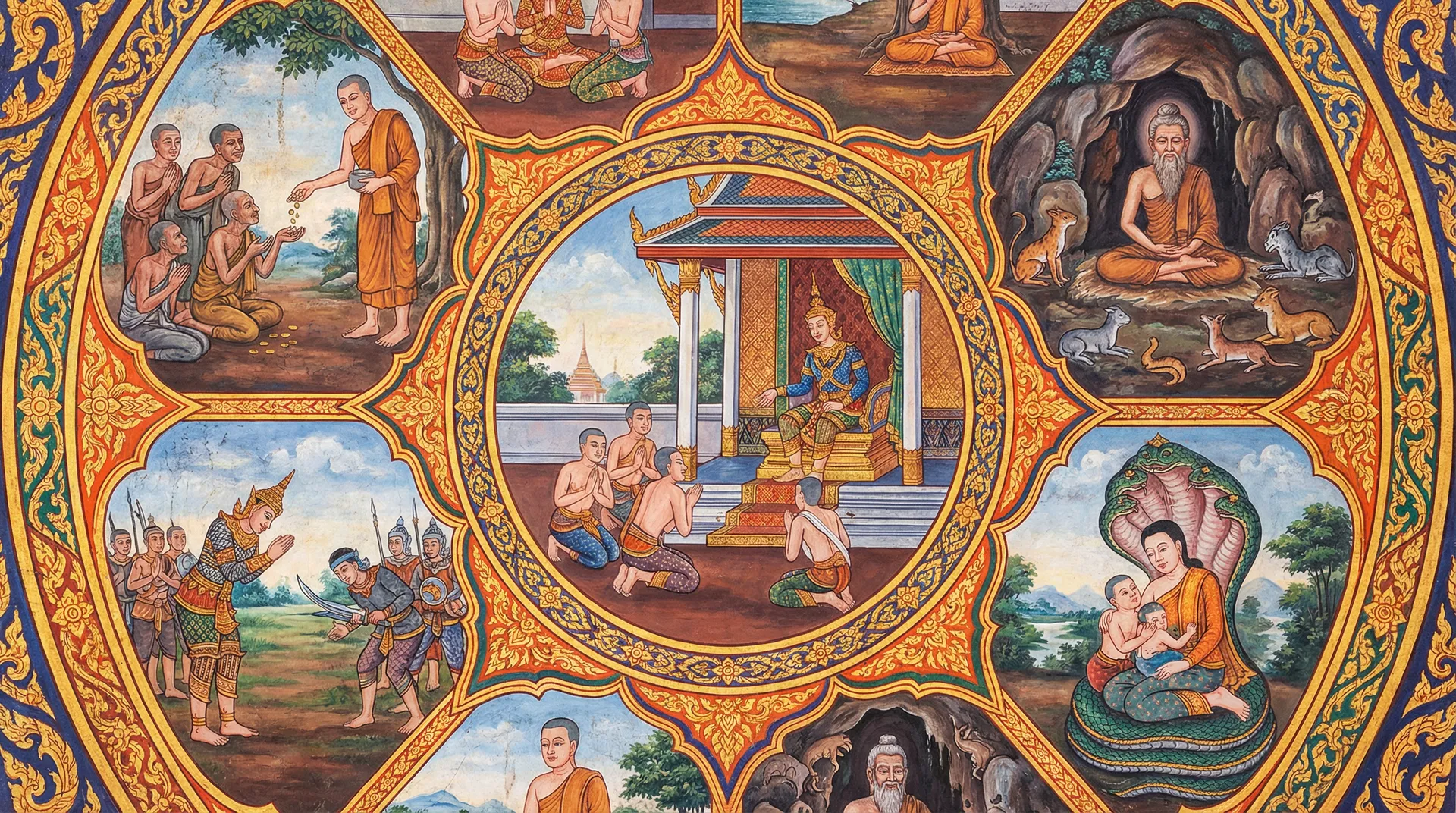 356Pañcakanipāta
Kosiya Jataka
Kosiya Jataka In the ancient city of Varanasi, nestled beside the sacred river Ganges, lived a wealt...
💡 True wisdom lies not just in intellectual knowledge, but in a contented mind, compassionate actions, and the generosity of spirit. Pride blinds us to deeper truths, while humility opens the door to genuine understanding.
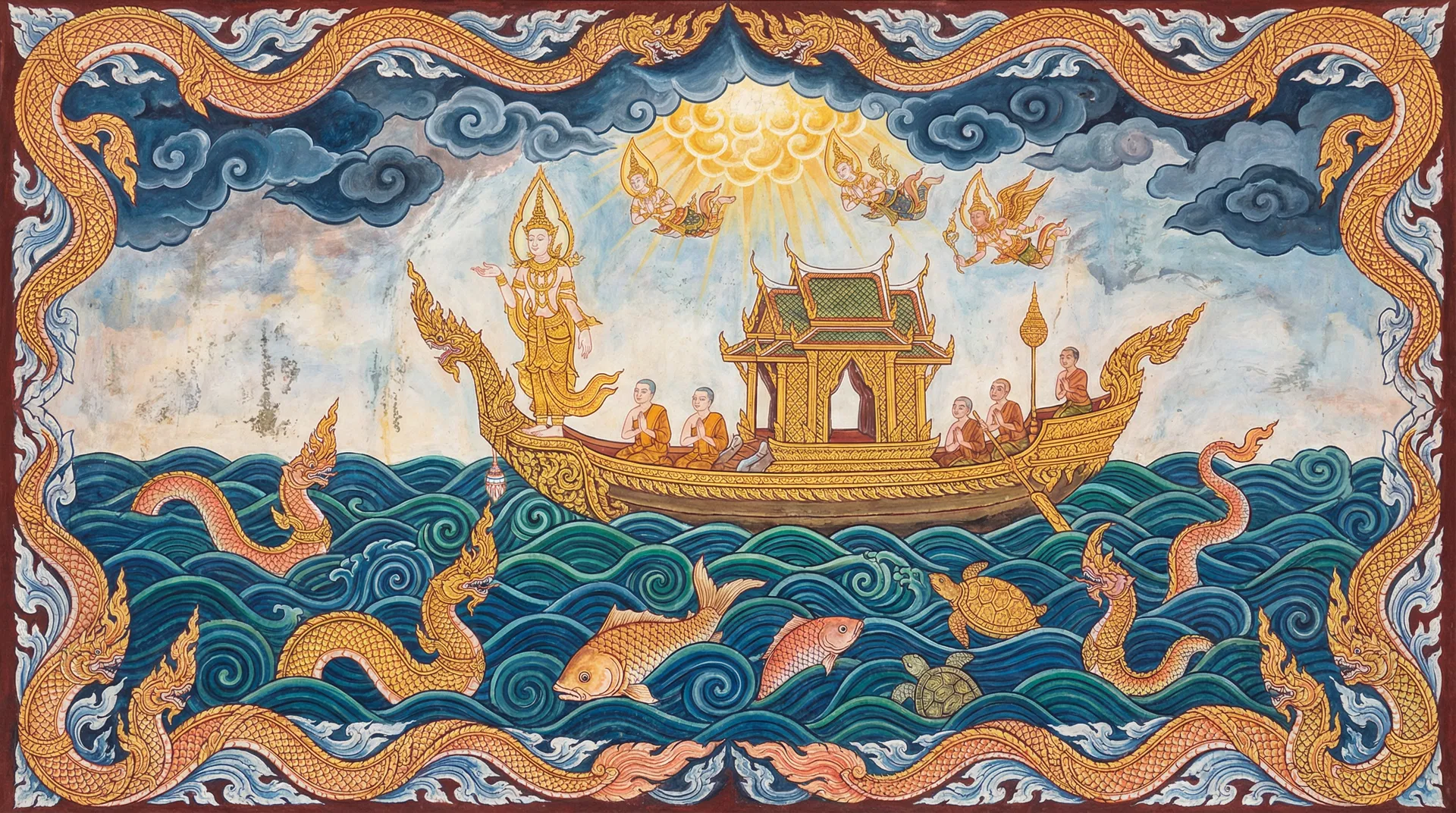 483Terasanipāta
Somanassa Jātaka
The Tale of the King of the Gods and the Benevolent King In the celestial realm of Tavatimsa, ruled ...
💡 Boundless compassion and selflessness, even in the face of extreme adversity, are the hallmarks of true virtue and leadership.
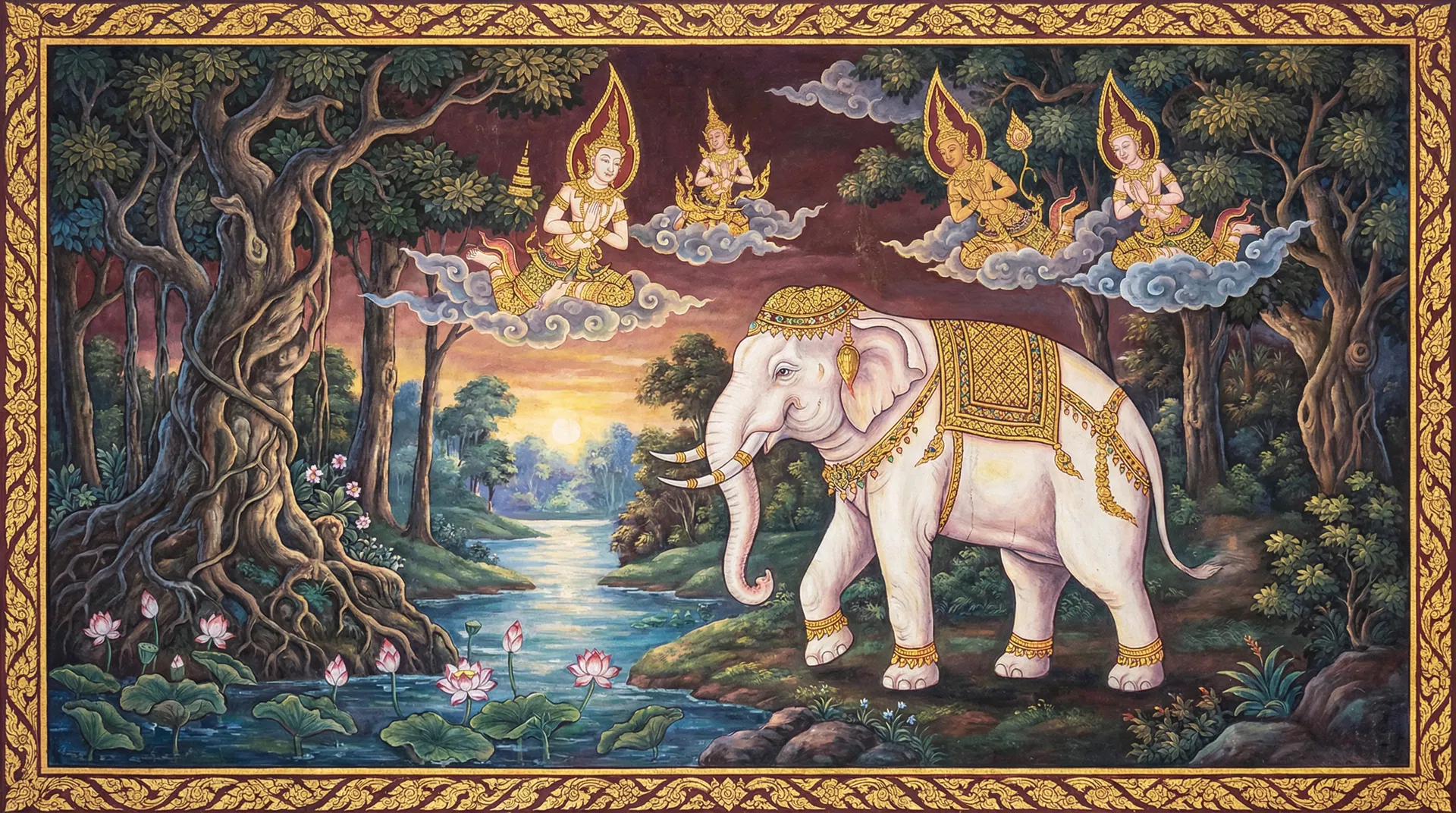 341Catukkanipāta
Mātanga Jātaka
Mātanga Jātaka In the ancient city of Varanasi, nestled beside the sacred River Ganges, there lived ...
💡 True renunciation and humility are more powerful than any material offering or ritual in overcoming adversity and bringing about true prosperity.
330CatukkanipātaThe Brave Hare Jataka
The Brave Hare Jataka In a sun-drenched land, where the earth was fertile and the trees bore abundan...
💡 Unfounded fear can lead to widespread delusion and panic. Courage and reason are essential to discern truth and overcome irrational anxieties.
306CatukkanipātaMahā-Ummagga Jātaka
The Great Tunneling TaleLong ago, in the ancient city of Mithila, ruled a wise and just king named J...
💡 True wisdom lies not just in knowledge, but in the ability to apply it with perseverance and compassion to overcome adversity. Even the most daunting challenges can be surmounted with a clear vision, unwavering determination, and the unity of a community.
— Multiplex Ad —